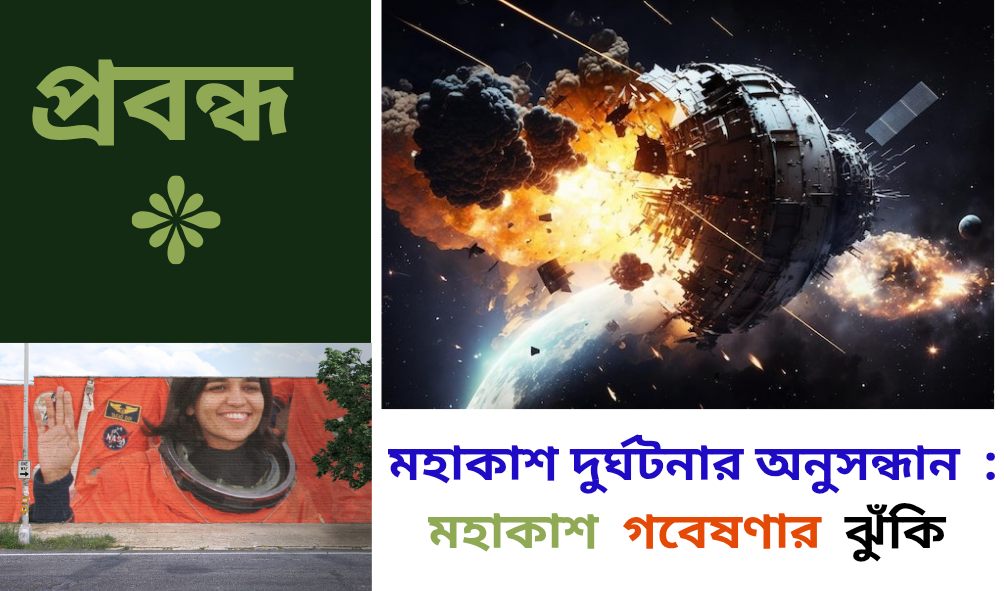
Space Accident Investigation : The Risks of Space Exploration
Space Accident Investigation : The Risks of Space Exploration
প্রবন্ধ হল নির্দিষ্ট বিষয়ের উপর ভাষা চর্চার তথ্যভিত্তিক উপস্থাপনা । জ্ঞানের গভীরতা বৃদ্ধি ও ভাষা বোধের দক্ষতার জন্য প্রবন্ধ পাঠ অনিবার্য । সেই উদ্দেশ্যেই আমরা আরম্ভ করেছি প্রবন্ধ নির্যাস নামক বিভাগ । এই বিভাগে সাম্প্রতিক ঘটনার পরিপ্রেক্ষিতে বিভিন্ন ধরনের বিষয়বস্তু অবলম্বনে প্রবন্ধ উপস্থাপন করা হবে । সাম্প্রতিক সময়ে আন্তর্জাতিক মহাকাশ স্টেশন থেকে সুরক্ষিত অবস্থায় পৃথিবীতে ফিরে এলেন দুই মহাকাশচারী কিন্তু বাইশ বছর পূর্বে ফেরা হয়নি কল্পনা ও তার সহকর্মীদের । স্মৃতি মন্থনে আজকের প্রবন্ধ Space Accident Investigation : The Risks of Space Exploration .
মহাকাশ দুর্ঘটনার অনুসন্ধান : মহাকাশ গবেষণার ঝুঁকি
মহাকাশ দুর্ঘটনা বলতে বোঝায় মহাকাশ অভিযানের সময় ঘটে যাওয়া অপ্রত্যাশিত ঘটনাগুলিকে, যার ফলে মহাকাশযান ক্ষতিগ্রস্ত হয় বা নষ্ট হয়ে যায় । একই সাথে ক্রু সদস্য বা যাত্রীদের আঘাত প্রাপ্তি বা প্রাণহানির মতো পরিণতি অথবা অভিযানের সাফল্যকে প্রভাবিত করে এমন অপ্রত্যাশিত পরিণতি ঘটে । অর্থাৎ মহাকাশ দুর্ঘটনার ফলে প্রাণহানি, মহাকাশযানের ক্ষতি এবং বিশ্বব্যাপী মহাকাশ সংস্থাগুলির বিপর্যয়ের মতো গুরুতর পরিণতি হতে পারে । মহাকাশ দুর্ঘটনা মহাকাশ অভিযানের উৎক্ষেপণ থেকে পুনঃপ্রবেশ পর্যন্ত যেকোনো পর্যায়ে ঘটতে পারে। অর্থাৎ লঞ্চ প্যাড দুর্ঘটনা, কক্ষপথে দুর্ঘটনা বা পুনঃপ্রবেশ কালীন দুর্ঘটনা মহাকাশ অভিযানের সাথে অঙ্গাঙ্গী ভাবে জড়িয়ে রয়েছে ।
মহাকাশ দুর্ঘটনার ধারণাটি আরও ভালভাবে বোঝার জন্য, বিশিষ্ট মহাকাশ সংস্থা এবং বিশেষজ্ঞদের দ্বারা প্রদত্ত সংজ্ঞাগুলি পরীক্ষা করা অপরিহার্য। মার্কিন মহাকাশ সংস্থা নাসা মহাকাশ দুর্ঘটনাকে “একটি অপরিকল্পিত ঘটনা বা ঘটনার ধারাবাহিকতা যার ফলে একটি মহাকাশযানের ক্ষতি হয় বা মহাকাশযানটি ধংস হয় এবং ক্রু সদস্য বা যাত্রীদের আঘাত বা প্রাণহানি হয়, অথবা মিশনের সাফল্যকে প্রভাবিত করে এমন অনিচ্ছাকৃত পরিণতি” হিসাবে সংজ্ঞায়িত করে । নাসার এই সংজ্ঞা মহাকাশ দুর্ঘটনার অপরিকল্পিত প্রকৃতির উপর জোর দেয় এবং মহাকাশযান, ক্রু সদস্য এবং মিশন সাফল্যের উপর সম্ভাব্য পরিণতি তুলে ধরে। ইউরোপীয় মহাকাশ সংস্থা (ESA) মহাকাশ দুর্ঘটনাকে “মহাকাশ অভিযানের সময় ঘটে যাওয়া মহাকাশযানের ক্ষতি বা ধ্বংস, ক্রুদের শারীরিক ক্ষতি বা প্রাণহানি, অথবা মিশনের সাফল্যকে প্রভাবিতকারী যেকোনো অপরিকল্পিত ঘটনা সংক্রান্ত অনিচ্ছাকৃত পরিণতি” বলে অভিহিত করে । ESA-এর সংজ্ঞা NASA-এর মতোই, তবে এই সংজ্ঞায় বৃহত্তর ভাষা ব্যবহারে মহাকাশ অভিযানের সময় ঘটে যাওয়া যেকোনো অপরিকল্পিত ঘটনাকে অন্তর্ভুক্ত করা হয়েছে । মার্স সোসাইটির প্রতিষ্ঠাতা ডঃ রবার্ট জুব্রিন মহাকাশ দুর্ঘটনাকে সংজ্ঞায়িত করতে গিয়ে বলেন, “মহাকাশ অভিযানের সময় ঘটে যাওয়া অপরিকল্পিত বা উদ্দেশ্যপ্রণোদনাহীন যেকোনো ঘটনার ফলে মানুষের ক্ষতি, সরঞ্জামের ক্ষতি বা মিশন ব্যাহত ব্যাহত হয়”। ডঃ জুব্রিনের সংজ্ঞা আরও সংক্ষিপ্ত এবং মহাকাশ দুর্ঘটনার অপরিকল্পিত প্রকৃতির উপর জোর দেয়, মানুষ, সরঞ্জাম এবং মিশন সাফল্যের উপর সম্ভাব্য পরিণতি তুলে ধরে। সংজ্ঞাগুলির তুলনা করলে, এটা স্পষ্ট যে মহাকাশ দুর্ঘটনার অপরিকল্পিত এবং অপ্রত্যাশিত প্রকৃতির উপর NASA, ESA এবং ডঃ জুব্রিনের মধ্যে ঐক্যমত্য রয়েছে। তবে, সংজ্ঞাগুলি তাদের জোর ও পরিধিতে সামান্য ভিন্ন।
মহাকাশ অভিযানের পর্যায়ের উপর ভিত্তি করে মহাকাশ দুর্ঘটনাগুলিকে শ্রেণীবদ্ধ করা অপরিহার্য। মহাকাশ দুর্ঘটনার শ্রেণীবিভাগ পরীক্ষা করলে দেখা যায় এর সাথে উৎক্ষেপণ দুর্ঘটনা, কক্ষপথে দুর্ঘটনা, পুনঃপ্রবেশ কালীন দুর্ঘটনা, অবতরণ দুর্ঘটনা এবং মহাকাশ পদযাত্রা কালীন দুর্ঘটনার বিষয়গুলি জড়িত রয়েছে । উৎক্ষেপণ দুর্ঘটনা হল মহাকাশ অভিযানের উৎক্ষেপণ পর্যায়ে ঘটে যাওয়া ব্যর্থতা। এই দুর্ঘটনাগুলির ফলে রকেট বিস্ফোরণ, অবাঞ্ছিত দহনের মতো ঘটনার ফলে উল্লেখযোগ্য ক্ষতি ও প্রাণহানি হতে পারে। উদাহরণস্বরূপ 1986 সালে সংঘটিত চ্যালেঞ্জার স্পেস শাটল দুর্ঘটনার কথা উল্লেখ করা যায়। উৎক্ষেপণকালে কঠিন রকেট বুস্টারের ত্রুটিপূর্ণ ও-রিং দ্বারা এই দুর্ঘটনা ঘটে । কক্ষপথে দুর্ঘটনা বলতে মহাকাশযান কক্ষপথে থাকাকালীন ঘটে যাওয়া ঘটনাগুলিকে বোঝায়। এই দুর্ঘটনাগুলি সংঘর্ষ, সিস্টেম ব্যর্থতা বা মহাকাশযানের কার্যক্রমকে প্রভাবিতকারী বিভিন্ন ঘটনার ফলে ঘটতে পারে। কক্ষপথে দুর্ঘটনার ফলে মহাকাশ ধ্বংসাবশেষ তৈরির মতো অনিচ্ছাকৃত পরিণতি উদ্ভূত হতে পারে । উদাহরণস্বরূপ, 2009 সালে রাশিয়ার দুই যোগাযোগ উপগ্রহ Iridium 33 ও Kosmos 2251 এর মধ্যে সংঘর্ষের কথা উল্লেখ করা যায় । এই সংঘর্ষের ফলে উল্লেখযোগ্য ধ্বংসাবশেষ এবং অন্যান্য মহাকাশযানের জন্য সম্ভাব্য ঝুঁকি তৈরি হয়েছিল। পুনঃপ্রবেশ দুর্ঘটনা হল মহাকাশ অভিযানের পুনঃপ্রবেশ পর্যায়ে ঘটে যাওয়া ব্যর্থতা। তাপ ঢাল ব্যর্থতা, নেভিগেশন ত্রুটি বা অন্যান্য ঘটনার ফলে এই ধরনের দুর্ঘটনাগুলি হতে পারে যা পৃথিবীর বায়ুমণ্ডলে মহাকাশযানের নিরাপদে পুনঃপ্রবেশের ক্ষমতাকে প্রভাবিত করে। উদাহরণস্বরূপ, 2003 সালে কলম্বিয়া মহাকাশ শাটল দুর্ঘটনার উল্লেখ করা যায় । উৎক্ষেপণের সময় ফেনা ইনসুলেশনের একটি টুকরো ভেঙে যাওয়ার ফলে শাটলের তাপ সুরক্ষা ব্যবস্থা ক্ষতিগ্রস্ত হয়ে এই পুনঃপ্রবেশ দুর্ঘটনা । অবতরণ দুর্ঘটনা হলো মহাকাশ অভিযানের অবতরণ পর্যায়ে ঘটে যাওয়া ব্যর্থতা। এই দুর্ঘটনাগুলো প্যারাসুট ত্রুটি, ভূখণ্ডের সংঘর্ষ, অথবা অন্যান্য ঘটনার কারণে হতে পারে যা মহাকাশযানের নিরাপদে অবতরণ করার ক্ষমতাকে প্রভাবিত করে। উদাহরণস্বরূপ, 1999 সালে মার্স পোলার ল্যান্ডার মিশনের দুর্ঘটনার কথা উল্লেখ করা যায় । এই দুর্ঘটনা ছিল সফ্টওয়্যার ত্রুটির কারণে সৃষ্ট অবতরণ দুর্ঘটনা যার ফলে মহাকাশযানটি মঙ্গলগ্রহের পৃষ্ঠে বিধ্বস্ত হয়। মহাকাশ পদযাত্রা (স্পেসওয়াক) কালীন দুর্ঘটনা হলো বহির্মুখী কার্যকলাপের (EVA) সময় ঘটে যাওয়া কোন দুর্ঘটনা ঘটনা। টিথারিং ব্যর্থতা, লাইফ সাপোর্ট সিস্টেমের ত্রুটি বা মহাকাশচারীর নিরাপত্তাকে প্রভাবিতকারী বিভিন্ন ঘটনার ফলে এরূপ দুর্ঘটনাগুলি সংঘটিত হতে পারে। উদাহরণস্বরূপ, 2013 সালে নাসার এক্সপিডিশন 36 মিশনের সময় স্পেসওয়াক দুর্ঘটনার কথা উল্লেখ করা যায় । 2013 সালের 13ই জুলাই আন্তর্জাতিক মহাকাশ স্টেশনের বহিঃভাগে কর্মরত ইতালীয় মহাকাশচারী লুকা (Luca Parmitano) এর হেলমেট হটাৎ করে জলে ভরে যায়, যা সাময়িকভাবে মহাকাশচারীদের নিরাপত্তার জন্য উল্লেখযোগ্য ঝুঁকি তৈরি করে।
মহাকাশ দুর্ঘটনার কারণগুলি বৈচিত্র্যময় এবং জটিল। মহাকাশ দুর্ঘটনার জন্য মানব ত্রুটি এক গুরুত্বপূর্ণ অবদানকারী, কারণ মহাকাশচারী বা মিশন নিয়ন্ত্রণ কর্মীদের দ্বারা করা ভুলগুলি গুরুতর পরিণতি ডেকে আনতে পারে আবার মহাকাশযান সিস্টেম, উপাদান বা সরঞ্জামের ত্রুটি বা ব্যর্থতার মতো প্রযুক্তিগত ব্যর্থতাও মহাকাশ দুর্ঘটনার কারণ হতে পারে। মহাকাশযানের নকশার সীমা অতিক্রমকারী পরিবেশগত কারণ, যেমন চরম তাপমাত্রা, বিকিরণ বা অন্যান্য পরিবেশগত পরিস্থিতিও মহাকাশ দুর্ঘটনার কারণ হতে পারে। মহাকাশ দুর্ঘটনার পরিণতি গুরুতর থেকে গুরুতর হতে পারে। মহাকাশ দুর্ঘটনার একটি উল্লেখযোগ্য পরিণতি হল প্রাণহানি । মহাকাশযানের ক্ষতি বা ধ্বংস হল মহাকাশ দুর্ঘটনার আরেকটি পরিণতি । এছাড়া পূর্বোক্ত একক বা যুগ্ম পরিণতির ফলে মিশন ব্যর্থতাও মহাকাশ দুর্ঘটনার আরেকটি গুরুত্বপূর্ণ পরিণতি, কারণ মিশনের উদ্দেশ্য অর্জনে ব্যর্থতার ফলে যেমন সম্পদের অপচয় ঘটে তেমনি সুযোগও হারাতে পারে।
➣ PSC Geography Study Materials
অসংখ্য সাফল্য এবং মাইলফলক সহ মহাকাশ অনুসন্ধান এক অসাধারণ বৈজ্ঞানিক যাত্রা । তবে, অন্যান্য যেকোনো প্রচেষ্টার মতোই মহাকাশ অনুসন্ধান ঝুঁকি ও হুমকিপূর্ণ । মহাকাশ দুর্ঘটনা মহাকাশ অনুসন্ধানের একটি কঠোর বাস্তবতা, যার ফলে বারংবার প্রাণহানি, মহাকাশযানের ক্ষতি এবং বিশ্বব্যাপী মহাকাশ সংস্থাগুলির জন্য বিপর্যয় ঘটনা ঘটেছে । এদের মধ্যে মানবচালিত মহাকাশযান দুর্ঘটনা মহাকাশ অনুসন্ধানের ইতিহাসে সবচেয়ে মর্মান্তিক ও বিধ্বংসী ঘটনাগুলির মধ্যে একটি। প্রাচীনতম এবং সবচেয়ে উল্লেখযোগ্য দুর্ঘটনাগুলির মধ্যে একটি হল 1967 সালে অ্যাপোলো 1-এ অগ্নিকাণ্ড, যা স্থল পরীক্ষার সময় তিনজন ক্রু সদস্যের প্রাণ কেড়ে নেয় । 1971 সালে পুনঃপ্রবেশের সময় ডিকম্প্রেশনের কারণে সয়ুজ 11 দুর্ঘটনার ফলে তিনজন সোভিয়েত মহাকাশচারীর মৃত্যু হয়। 1986 সালে চ্যালেঞ্জার মহাকাশযান দুর্ঘটনায় উৎক্ষেপণের মাত্র 73 সেকেন্ড পরে সাতজন ক্রু সদস্য নিহত হন । আবার 2003 সালে কলম্বিয়া মহাকাশযান দুর্ঘটনায় পুনঃপ্রবেশের সময় ভারতীয় বংশোদ্ভূত কল্পনা চাওলা সহ সাতজন ক্রু-সদস্য নিহত হন। মানববিহীন মহাকাশযান দুর্ঘটনাও মহাকাশ অনুসন্ধানে একটি উল্লেখযোগ্য উদ্বেগের বিষয় হয়ে দাঁড়িয়েছে। 1962 সালে কম্পিউটার ত্রুটির কারণে রেঞ্জার 3 চন্দ্রাভিযান মিশন ব্যর্থ হয়, 1962 সালে মেরিনার 1 ভেনাস ফ্লাইবাই মিশন উৎক্ষেপণ যানের ত্রুটির কারণে ব্যর্থ হয়। 1988 সালে কম্পিউটার ত্রুটির কারণে সোভিয়েত মঙ্গল অভিযান ফোবোস 1 ব্যর্থ হয় এবং 1999 সালে সফ্টওয়্যার ত্রুটির কারণে নাসার মঙ্গল অভিযান মার্স পোলার ল্যান্ডার এবং ডিপ স্পেস 2 ব্যর্থ হয়। মহাকাশ অনুসন্ধানে লঞ্চ যান দুর্ঘটনা আরেকটি উল্লেখযোগ্য ঝুঁকি। 1997 সালে উৎক্ষেপণের মাত্র 12 সেকেন্ড পরে ডেল্টা 2 উৎক্ষেপণ যানটিতে বিস্ফোরণ ঘটে, আবার 1996 সালে উৎক্ষেপণের মাত্র 37 সেকেন্ড পরে আরিয়ান 5 উৎক্ষেপণ যানে একই ঘটনার পুনরাবৃত্তি হয়। 2013 সালে উৎক্ষেপণের মাত্র 17 সেকেন্ড পরে প্রোটন-এম উৎক্ষেপণ যানটি বিধ্বস্ত হয় এবং 2014 সালে উৎক্ষেপণের মাত্র 6 সেকেন্ড পরে অ্যান্টারেস উৎক্ষেপণ যানে বিস্ফোরন ঘটে । মহাকাশ গবেষণার ইতিহাসে মহাকাশ স্টেশন দুর্ঘটনাও অন্তর্ভুক্ত । 1997 সালে রাশিয়ান মহাকাশ স্টেশন মিরে আগুন লাগা বা 2006 সালে কম্পিউটারের ত্রুটির কারণে আন্তর্জাতিক মহাকাশ স্টেশনের অবস্থান পরিবর্তন এরূপ ঘটনার উদাহরণ । 2018 সালে আন্তর্জাতিক মহাকাশ স্টেশন (আইএসএস)-এ ডক করা একটি সয়ুজ মহাকাশযানের চাপ লিকেজের ঘটনাও রয়েছে । সম্প্রতি, 2024 সালের 5 জুন লঞ্চ হওয়া বোয়িং স্টারলাইনার (Boeing Starliner) এর Boeing Crew Flight Test (Boe-CFT) নামক মিশনে অংশগ্রহণকারী নাসার দুই মহাকাশচারী উইলমোর (Barry E. Wilmore) ও ভারতীয় বংশোদ্ভূত সুনীতা (Sunita William) স্পেসক্র্যাফটে যান্ত্রিক ত্রুটির কারণে দীর্ঘ প্রায় নয় মাস আন্তর্জাতিক স্পেস স্টেশনে আটকা পড়েন । যদিও দীর্ঘ 9 মাস পর 2025 সালের 18ই মার্চ SpaceX Crew-9 spacecraft এর মাধ্যমে তারা পৃথিবীতে সুরক্ষিত পদার্পণ করেন ।
পরিশেষে বলা যায়, মহাকাশ দুর্ঘটনার ইতিহাস মহাকাশ অনুসন্ধানের ঝুঁকি ও প্রতিবন্ধকতাগুলির একটি গুরুতর স্মারক। এই ইতিহাসে মনুষ্যবাহী মহাকাশযান দুর্ঘটনা, মনুষ্যবিহীন মহাকাশযান দুর্ঘটনা, উৎক্ষেপণ যানবাহন দুর্ঘটনা, মহাকাশ স্টেশন দুর্ঘটনা এবং অন্যান্য দুর্ঘটনা ঘটেছে, যার ফলে প্রাণহানি, মহাকাশযানের ক্ষতি এবং বিশ্বব্যাপী মহাকাশ সংস্থাগুলির বিপর্যয় ঘটেছে। এই ঝুঁকিগুলি হ্রাস করার এবং ভবিষ্যতের মহাকাশ অভিযানের সাফল্য নিশ্চিত করার কৌশল তৈরির জন্য এই দুর্ঘটনার কারণ এবং পরিণতির বোধগম্যতা অপরিহার্য। আগামীদিনে মহাকাশ বিজ্ঞান ও প্রকৌশল বিজ্ঞানের উন্নতির সাথে সাথে আমরা দুর্ঘটনা বিহীন মহাকাশ অভিযানের সুন্দর জয়গাঁথা লিখতে পারব বলেই আশাবাদী ।
⟽ পূর্ববর্তী প্রবন্ধ : লাল চন্দনের কালোবাজারি
➣ Read in Hindi ➣ Read in English
Discover more from NIRYAS.IN
Subscribe to get the latest posts sent to your email.


