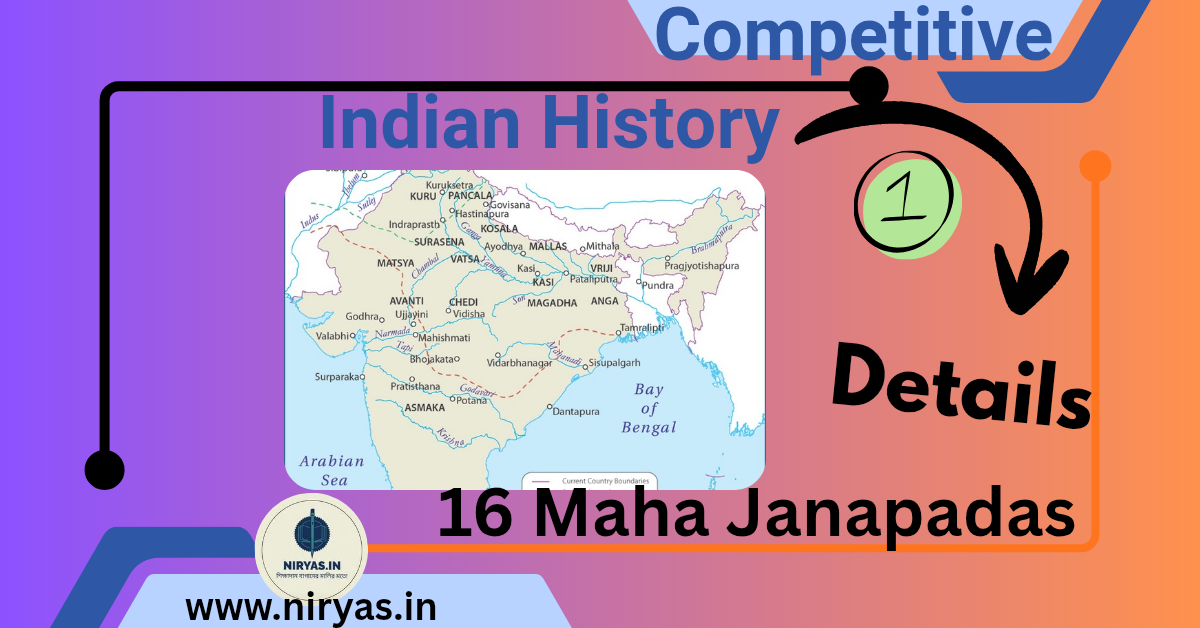
The 16 Mahajanapadas
The 16 Mahajanapadas
ভারতের ইতিহাসে মূলতঃ প্রাচীন ইতিহাসের একটি অত্যন্ত গুরুত্বপূর্ণ বিষয়বস্তু হলঃ ষোড়শ মহা জনপদ । 16টি বিখ্যাত জনপদ, এদের অবস্থান, পারস্পরিক সম্পর্ক, রাজধানী ইত্যাদি নানান তথ্যকে কেন্দ্র করে এখান থেকে প্রতিযোগিতামূলক পরীক্ষায় প্রশ্ন এসে থাকে । এই সমস্ত প্রশ্নের উত্তর যাতে সঠিকভাবে চটজলদি দেওয়া যায় সেই লক্ষ্যে The 16 Mahajanapadas পোস্টের অবতারণা । এবার তাহলে চোখ বুলিয়ে নেওয়া যাক টপিকটিতে
ষোড়শ মহা জনপদ (16 Maha Janapadas)
আমরা মগধ সাম্রাজ্যের উত্থানের প্রাক কথনে সেই সময়কালে ভারতে বিরাজমান 16 টি বৃহৎ মহা জনপদের অস্তিত্ব ছিল বলে জানতে পারি, এবং এই মহা জনপদগুলি হল যথাক্রমে – i) অঙ্গ (Anga), ii) অস্মক (Assaka or Asmaka), iii) অবন্তি Avanti), iv) চেদি (Chedi), v) গান্ধার (Gandhara), vi) কাশি (Kashi), vii) কম্বৌজ (Kamboja), viii) কোশল (Kosala), ix) কুরু (Kuru), x) মগধ (Magadha), xi) মল্ল (Malla), xii) মৎস্য (Machcha or Matsya), xiii) পঞ্চাল (Panchala), xiv) সুরসেন (Surasena), xv) বৃজি (Vriji), ও xvi) বৎস (Vatsa) ।
ঐতিহাসিক কাল বিভাজন অনুসারে লৌহ যুগে খ্রিস্টপূর্ব 600 থেকে 345 খ্রিস্টপূর্বাব্দ সময়কাল পর্যন্ত এই মহাজনপদগুলি সমান্তরালভাবে বিকশিত হয় । 345 খ্রিস্টপূর্বাব্দে মহাপদ্ম নন্দ দ্বারা মগধ সাম্রাজ্যের তৃতীয় রাজবংশ হল নন্দ বংশ প্রতিষ্ঠিত হবার পর ধীরেধীরে এই জনপদগুলি মগধের সাথে বিলুপ্ত হতে থাকে ।
ষোড়শ মহাজন পদগুলির মধ্যে অধিকাংশই গড়ে উঠেছিল গঙ্গা অববাহিকা ও হিমালয় এবং দক্ষিণে গঙ্গা অববাহিকা ও দাক্ষিনাত্য মালভূমির মধ্যবর্তী অংশে মধ্যবর্তী অংশে । আবার 16 টির মধ্যে 14 টি মহাজন পদ গড়ে উঠেছিল বর্তমান ভারতের মধ্যে এবং দুটি মহাজনপদ যথাঃ কম্বোজ ও গান্ধার গড়ে উঠেছিল বর্তমান উঃ পাকিস্তান ও আফগানিস্তানে । একেবারে উঃ-পশ্চিমে অবস্থিত মহাজনপদটি হল কম্বোজ , এবং একেবারে পূর্বে অবস্থিত মহাজনপদটি হল অঙ্গ । গঙ্গা অববাহিকার দক্ষিণে 6 টি মহাজনপদ অবস্থান করত এগুলি হল সুরসেনা, মৎস্য, বৎস, চেদি, অবন্তি ও অস্মক । এদের মধ্যে অবন্তি অবস্থিত ছিল পশ্চিম-মধ্য ভারতে এবং দক্ষিণ ভারতের একমাত্র মহাজনপদ হিসাবে অবস্থান করত অস্মক মহাজনপদ ।
মহাজনপদগুলির মধ্যে অবন্তি ছিল সর্ববৃহৎ এবং মগধ ছিল সর্বাধিক শক্তিশালী । মল্ল, বজ্জি, কম্বৌজ, কুরু এই চারটি মহাজনপদ প্রকৃতিগতভাবে ছিল প্রজাতান্ত্রিক এবং অবশিষ্ট 12 টি ছিল রাজতান্ত্রিক । কুরু, পঞ্চাল, কাশি, অঙ্গ প্রভৃতি মহাজনপদগুলি বৈদিক পরবর্তী সময়ে 1100 খ্রিস্টপূর্বাব্দ সময় থেকে বিকশিত হতে আরম্ভ করে ।
অঙ্গ (Anga) : ষোড়শ মহাজনপদগুলির মধ্যে একেবারে পূর্ব প্রান্তে অবস্থিত জনপদ হল অঙ্গ । এর রাজধানী ছিল চম্পা (Champa)। বর্তমান ভারতের মুঙ্গের ও ভাগলপুর জেলা নিয়ে এই মহাজনপদ বিকশিত হয়েছিল ।
অস্মক (Assaka or Asmaka) : দক্ষিণ ভারতের একমাত্র মহাজনপদ হল অস্মক । এর রাজধানী ছিল পোটানা (Potana) তে । এই মহাজনপদ নর্মদা ও গোদাবরী নদীর মধ্যবর্তী অংশে অন্ধ্র প্রদেশ, তেলেঙ্গানা ও মহারাষ্ট্র রাজ্যের অংশজুড়ে বিকশিত হয়েছিল ।
অবন্তি (Avanti) : অবন্তি মহাজনপদ দক্ষিণ পশ্চিম ভারতের বর্তমান মালব অঞ্চলে অবস্থান করত । মহাজনপদগুলির মধ্যে আয়তনে এটি ছিল সর্ববৃহৎ । উজ্জয়িনি ও মহিষমতি ছিল এর রাজধানী ।
চেদি (Chedi) : গঙ্গা নদীর দক্ষিণ অংশে বর্তমান ভারতের বুন্দেলখণ্ড অঞ্চলে চেদি মহাজনপদ অবস্থান করত । এর রাজধানী ছিল শুকতিমতি (Shuktimati)।
গান্ধার (Gandhara) : বর্তমান ভারতের বাইরে যে দুটি মহাজনপদ সেই সময় বিকশিত হয়েছিল তাদের মধ্যে একটি হল গান্ধার । এই মহাজনপদটি বর্তমান পাকিস্তানের পশ্চিম অংশ এবং আফগানিস্তানের পূর্ব অংশে অবস্থান করত । এর রাজধানী ছিল তক্ষশিলা (Taxila) ।
কাশি (Kashi) : ষোড়শ মহাজনপদগুলির মধ্যে একটি অত্যন্ত গুরুত্বপূর্ণ পদ ছিল কাশি । এটি বর্তমান ভারতের বারানসী বা অধুনা বেনারস অঞ্চলে অবস্থান করত । এর রাজধানী ছিল বারানসী (Varanasi) ।
কম্বৌজ (Kamboja) : বর্তমান ভারতের বাইরে যে দুটি মহাজনপদ সেই সময় বিকশিত হয়েছিল তাদের মধ্যে একটি হল কম্বৌজ । এটি হিন্দুকুশ পর্বত সংলগ্ন কাশ্মির অংশে অবস্থান করত যা বর্তমান পাকিস্তানের হাজারা জেলার অন্তর্গত । এর রাজধানী ছিল রাজাপুরা (Rajapura)।
কোশল (Kosala) : কোশল মহাজনপদটি গঙ্গার উত্তরে হিমালয়ের পাদদেশে বর্তমান পূর্ব উত্তর প্রদেশের ফরিজাবাদ, গোন্ডা, বাহরাইচ প্রভৃতি জেলায় অবস্থিত ছিল । এর রাজধানী ছিল সারাবস্তি (Sravasti) ।
কুরু (Kuru) : বর্তমান ভারতের মধ্যে অবস্থিত মহাজনপদগুলির মধ্যে উত্তর ভারতে অবস্থিত মহাজনপদগুলির সর্ব পশ্চিমের মহাজনপদ ছিল কুরু । কুরু বর্তমান ভারতের দিল্লী-হরিয়ানা অংশে গড়ে উঠেছিল । এর রাজধানী ছিল ইন্দ্রপ্রস্থ (Indraprastha) ।
➣ ভারতের গুরুত্বপূর্ণ স্মৃতিবেদী
মগধ (Magadha) : প্রাচীন ভারতের মহাজনপদগুলির মধ্যে বৌদ্ধ পরবর্তী সময়ে সর্বাধিক শক্তিশালী জনপদ ছিল মগধ । এটি বর্তমান ভারতের বিহারের পাটনাগয়া এবং শাহাবাদ জেলার আংশিক অংশ জুড়ে বিকশিত হয়েছিল । এর প্রাথমিক পর্বে রাজধানী ছিল রাজগির বা রাজগৃহ (Rajgriha) যা পরবর্তী সময়ে পাটলিপুত্রে (Patliputra) স্থানান্তরিত হয় ।
মল্ল (Malla) : উঃ-পূর্ব ভারতে হিমালয়ের পাদদেশে বর্তমান ভারতের পূর্ব উত্তর প্রদেশের দেওরিয়া, বস্তি, গোরক্ষপুর ও সিদ্ধার্থনগর জেলার বিস্তৃত অংশ নিয়ে মল্ল মহাজনপদ অবস্থান করত । মল্ল এর রাজধানী ছিল কুশিনাড়া ও পাওয়া (Kusinara and Pawa) ।
মৎস্য (Machcha or Matsya) : বর্তমান মূল ভারতীয় ভূখণ্ডে অবস্থিত মহাজনপদগুলির একেবারে পশ্চিমে অবস্থিত মহাজনপদটি ছিল মল্ল । ইহা বর্তমান ভারতের রাজস্থান রাজ্যের আলওয়ার, ভরতপুর ও জয়পুর জেলার ক্ষেত্রে অবস্থান করত । এর রাজধানী ছিল বিরাটনগর (Viratanagara) । এর উত্তরে কুরু, দক্ষিণে অবন্তি এবং পূর্বে সুরসেনা মহা জনপদ অবস্থান করত ।
পঞ্চাল (Panchala) : গঙ্গা নদীর উত্তরে ও হিমালয়ের দক্ষিণ পাদদেশের মধ্যবর্তী অংশে বর্তমান ভারতের পশ্চিম উত্তর প্রদেশের যমুনা নদী পর্যন্ত অংশে পঞ্চাল মহাজনপদ অবস্থান করত । পঞ্চাল মহাজনপদ দুটি অংশে বিভক্ত ছিল এর উত্তর অংশ বা উত্তর পঞ্চাল এর রাজধানী ছিল অহিছত্র (Ahichhatra) এবং দক্ষিণ পঞ্চাল এর রাজধানী ছিল কাম্পিল্য (Kampilya) ।
সুরসেন (Surasena) : যমুনা নদীর দক্ষিণ পাড়ে বর্তমান ভারতের মথুরা সংলগ্ন অঞ্চলে সুরসেন মহাজনপদ অবস্থান করত । এর রাজধানী ছিল মথুরা (Mathura) ।
বৃজি (Vriji) : গঙ্গা নদীর উত্তর অববাহিকায় বর্তমান ভারতের বিহার রাজ্যের উত্তর অংশে বৃজি বা বজ্জি মহাজনপদ অবস্থান করত । এর রাজধানী ছিল বৈশালী (Vaishali) ।
বৎস (Vatsa) : গঙ্গা ও যমুনা নদীর সঙ্গমস্থল পার্শবর্তী অঞ্চলে বর্তমান ভারতের এলাহাবাদ ও মির্জাপুর জেলার বিস্তৃত অঞ্চলজুড়ে বৎস এর অবস্থান ছিল । এর রাজধানী ছিল কৌসম্বি (Kaushambi) ।
Sixteen Maha Janapadas
We know that there were 16 major Janapadas in India during the pre-eminence of the Magadha Empire, and these Maha Janapadas are respectively – i) Anga, ii) Assaka or Asmaka, iii) Avanti, iv) Chedi, v) Gandhara, vi) Kashi, vii) Kamboja, viii) Kosala, ix) Kuru, x) Magadha, xi) Malla, xii) Machcha or Matsya, xiii) Panchala, xiv) Surasena, xv) Vriji, and xvi) Vatsa.
According to historical time division, these Mahajanapadas developed in parallel during the Iron Age from 600 BC to 345 BC. After the establishment of the third dynasty of the Magadha Empire, the Nanda dynasty, by Mahapadma Nanda in 345 BC, these Janapadas gradually disappeared along with Magadha.
Most of the sixteen Mahajanapadas developed in the Ganges basin and the Himalayas and in the south between the Ganges basin and the Deccan Plateau. Again, 14 of the 16 Mahajanapadas developed in present-day India and two Mahajanapadas, namely Kamboja and Gandhara, developed in present-day North Pakistan and Afghanistan. The Mahajanapada located in the extreme north-west is Kamboja, and the Mahajanapada located in the extreme east is Anga. There were 6 Mahajanapadas south of the Ganges basin, namely Surasena, Matsya, Vatsa, Chedi, Avanti and Asmaka. Of these, Avanti was located in west-central India and Asmaka Mahajanapada was the only Mahajanapada in South India.
Avanti was the largest and Magadha was the most powerful. Four Mahajanapadas, Malla, Bajji, Kamboja and Kuru, were republican in nature and the remaining 12 were monarchical. Mahajanapadas like Kuru, Panchala, Kashi and Anga started to develop in the post-Vedic period from 1100 BCE.
Anga: The easternmost of the sixteen Mahajanapadas is Anga. Its capital was Champa. This Mahajanapada developed in the present-day districts of Munger and Bhagalpur in India.
Assaka or Asmaka: The only Mahajanapada in South India was Asmaka. Its capital was at Potana. This Mahajanapada spread across the region between the Narmada and Godavari rivers, covering parts of Andhra Pradesh, Telangana and Maharashtra.
Avanti: The Avanti Mahajanapada was located in the present-day Malwa region of southwestern India. It was the largest of the Mahajanapadas in terms of area. Its capitals were Ujjain and Mahishasuri.
Chedi: The Chedi Mahajanapada was located in the present-day Bundelkhand region of India, south of the Ganges. Its capital was Shuktimati.
Gandhara: One of the two great states that developed outside present-day India at that time was Gandhara. This great state was located in the western part of present-day Pakistan and the eastern part of Afghanistan. Its capital was Taxila.
Kashi: One of the sixteen great states was Kashi. It was located in the present-day Varanasi or Benares region of India. Its capital was Varanasi.
Kamboja: One of the two great states that developed outside present-day India at that time was Kamboja. It was located in the part of Kashmir adjacent to the Hindu Kush mountains, which is part of the present-day Hazara district of Pakistan. Its capital was Rajapura.
Kosala: The Kosala great state was located north of the Ganges at the foot of the Himalayas in the present-day districts of eastern Uttar Pradesh, such as Farizabad, Gonda, Bahraich, etc. Its capital was Sravasti.
Kuru: Among the Mahajanapadas located in present-day India, Kuru was the westernmost Mahajanapada in North India. Kuru was located in the present-day Delhi-Haryana part of India. Its capital was Indraprastha.
Magadha: Magadha was the most powerful of the Mahajanapadas of ancient India in the post-Buddhist period. It spread over parts of the present-day Patna and Shahabad districts of Bihar, India. Its initial capital was Rajgir or Rajgriha, which was later shifted to Patliputra.
Malla: The Malla Mahajanapada was located in the foothills of the Himalayas in northeastern India, covering a large part of the present-day Deoria, Basti, Gorakhpur and Siddharthanagar districts of eastern Uttar Pradesh, India. The Malla capitals were Kusinara and Pawa.
Machcha or Matsya: The Malla Mahajanapada was the westernmost Mahajanapada of the present-day mainland India. It was located in the areas of Alwar, Bharatpur and Jaipur districts of the present-day Rajasthan state, India. Its capital was Viratanagara. To the north of it were Kuru, to the south was Avanti and to the east was Surasena Mahajanapada.
Panchala: Panchal Mahajanapada was located in the north of the Ganges River and between the southern foothills of the Himalayas, in the present western Uttar Pradesh of India up to the Yamuna River. Panchal Mahajanapada was divided into two parts, the capital of its northern part or North Panchal was Ahichhatra and the capital of its southern Panchal was Kampilya.
Surasena: Surasena Mahajanapada was located in the area adjacent to Mathura in present-day India on the south bank of the Yamuna River. Its capital was Mathura.
Vriji: Vriji or Bajji Mahajanapada was located in the northern basin of the Ganges River in the northern part of the present-day state of Bihar in India. Its capital was Vaishali.
Vatsa: Vatsa was located in the area around the confluence of the Ganges and Yamuna rivers, covering a vast area of present-day Allahabad and Mirzapur districts of India. Its capital was Kaushambi.
Discover more from NIRYAS.IN
Subscribe to get the latest posts sent to your email.